Built by a Music School Owner Who Got Fed Up
TonicBase exists because Jordan Olsen spent 12 years running a real music school with software that was never quite right — and finally built the tool he always wished someone else would.
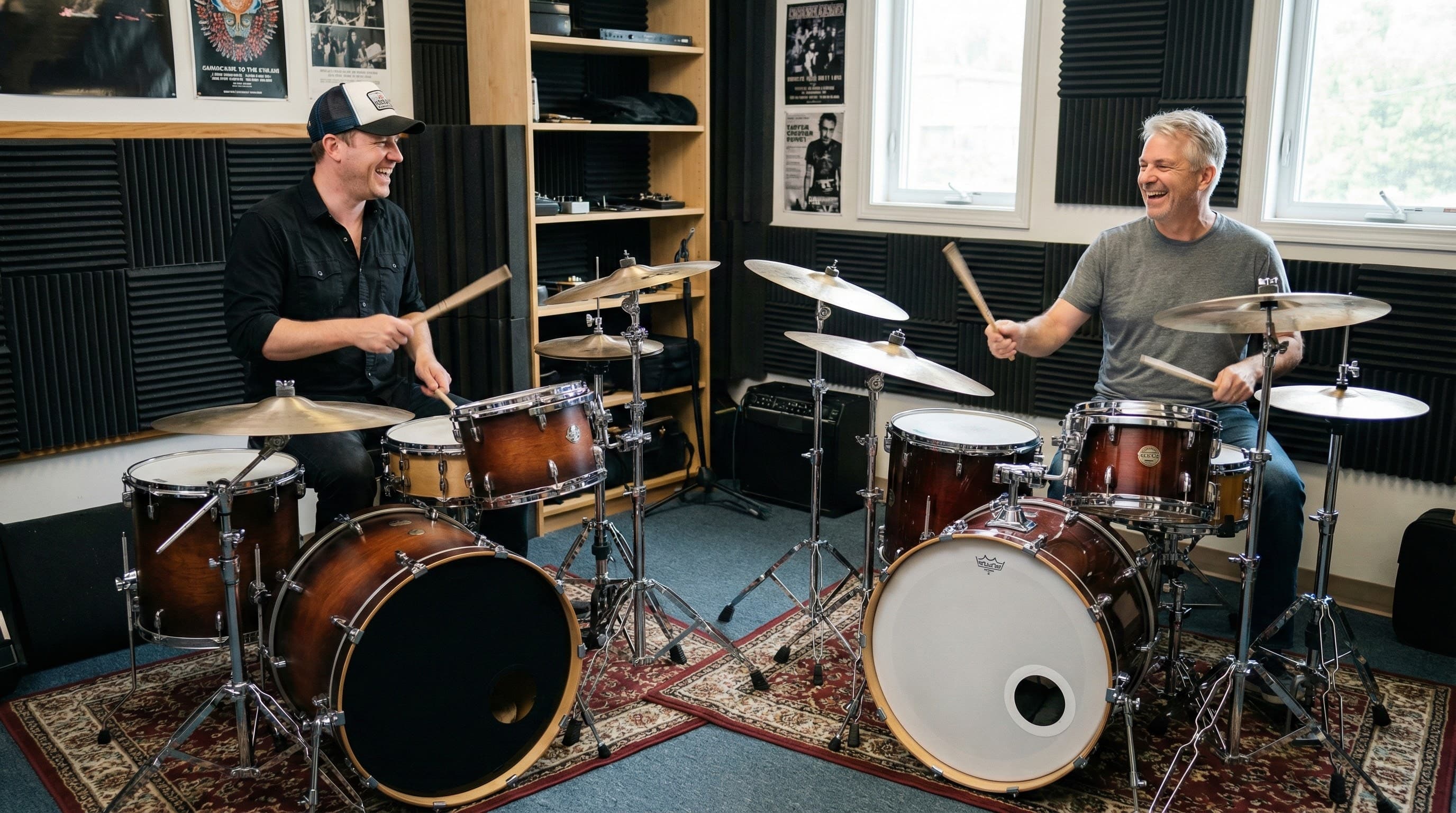
A musician first
Jordan picked up a guitar at 14 and never really put it down. He grew up in a musical family — parents who played, grandparents who owned a theater. He played in bands through his twenties, including Gorgeous Hussies, an alt-rock outfit that signed with a record label in 2009. He's not a tech founder who discovered the music school market. He's a musician who built a school, and then built the software because nothing else worked.
12 years at On Chord Academy
In 2013, Jordan co-founded On Chord Academy in Layton, Utah — a music school that grew to roughly 160 students and 8 teachers. He ran it as the owner, the head teacher, and often the front desk. He tried every tool the market offered. He paid $225/month for Zen Planner (a fitness platform). He chased payments by hand. He followed up on trial lessons personally, one at a time, and watched conversions slip through the cracks when life got busy.
He also went through three sales calls with Opus1, the most-hyped competitor in the space, and was never given a straight price.
What he built instead
TonicBase was designed around one question: what would a world-class front office assistant do for a music school? The answer became the 5 Invisible Assistants — automated systems that book trial lessons, recover failed payments, fill schedule holes from the waitlist, schedule makeup lessons, and answer parent questions at midnight. All running in the background. All the time.
On Chord Academy became the proving ground. Every feature was tested on a real school with real students before it was offered to anyone else.
What TonicBase stands for
Transparency.
Our pricing is on a public webpage. No sales calls, no “contact us for pricing.” What you see is what you pay.
Alignment.
We earn 0.5% of tuition you collect — so we only earn more when you grow. Our incentives are exactly aligned with yours.
Craft.
Built by musicians, for musicians. Music education is a calling — the software that supports it should reflect that.